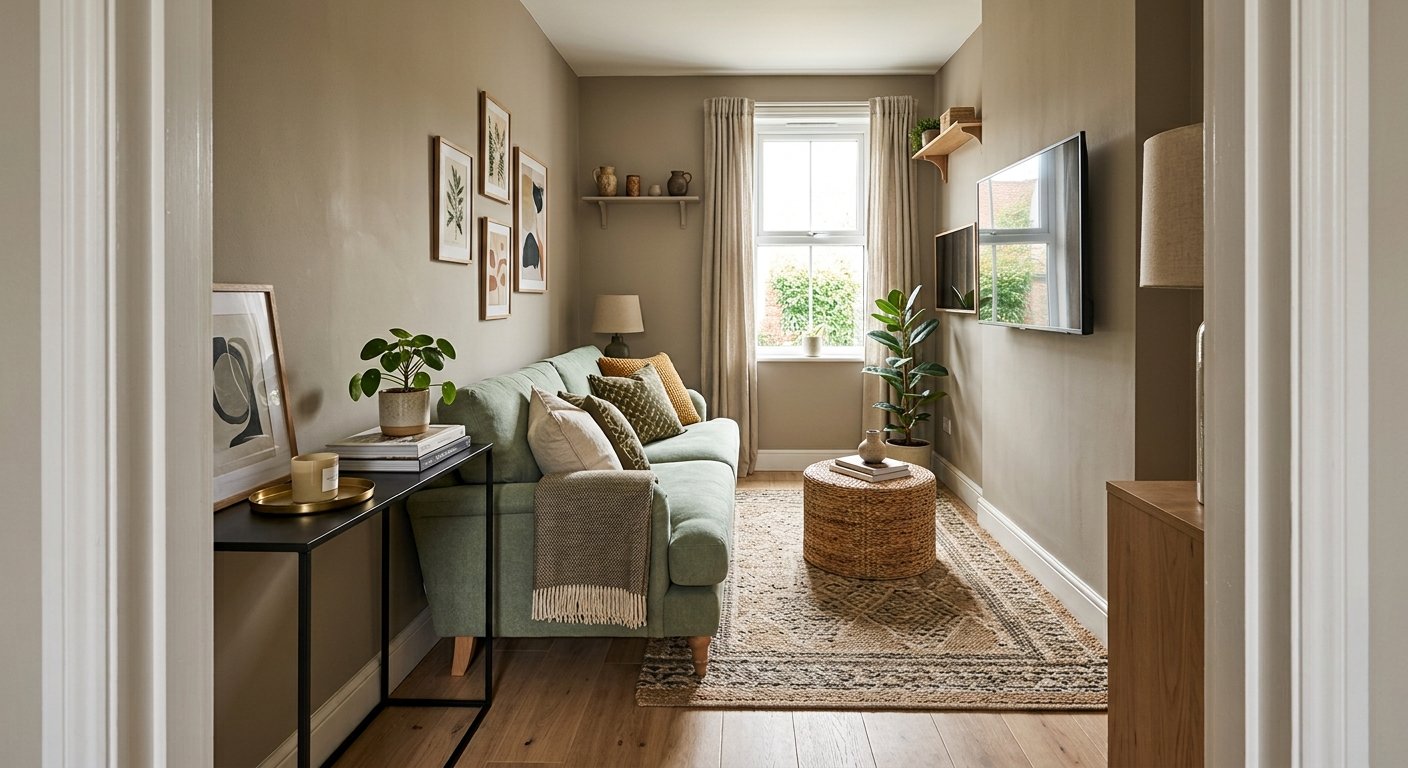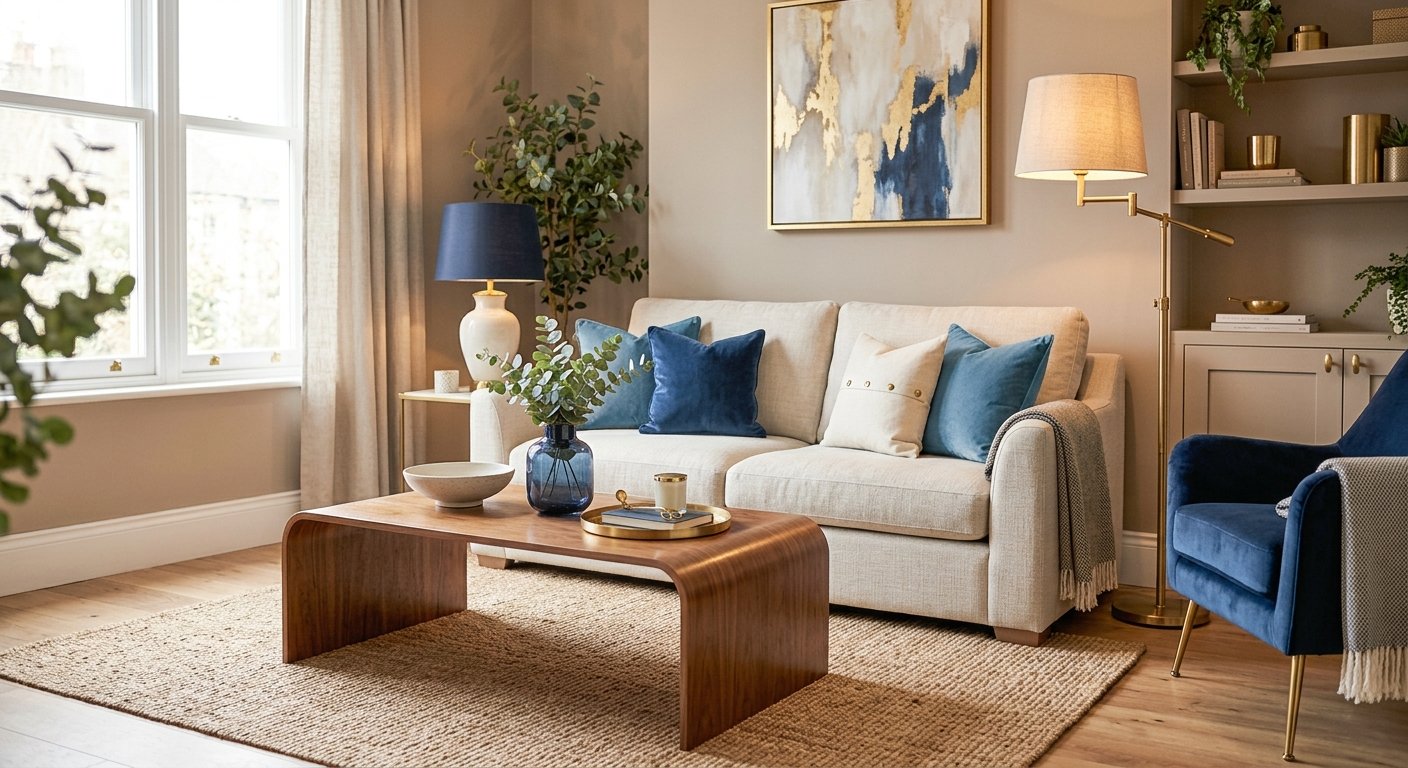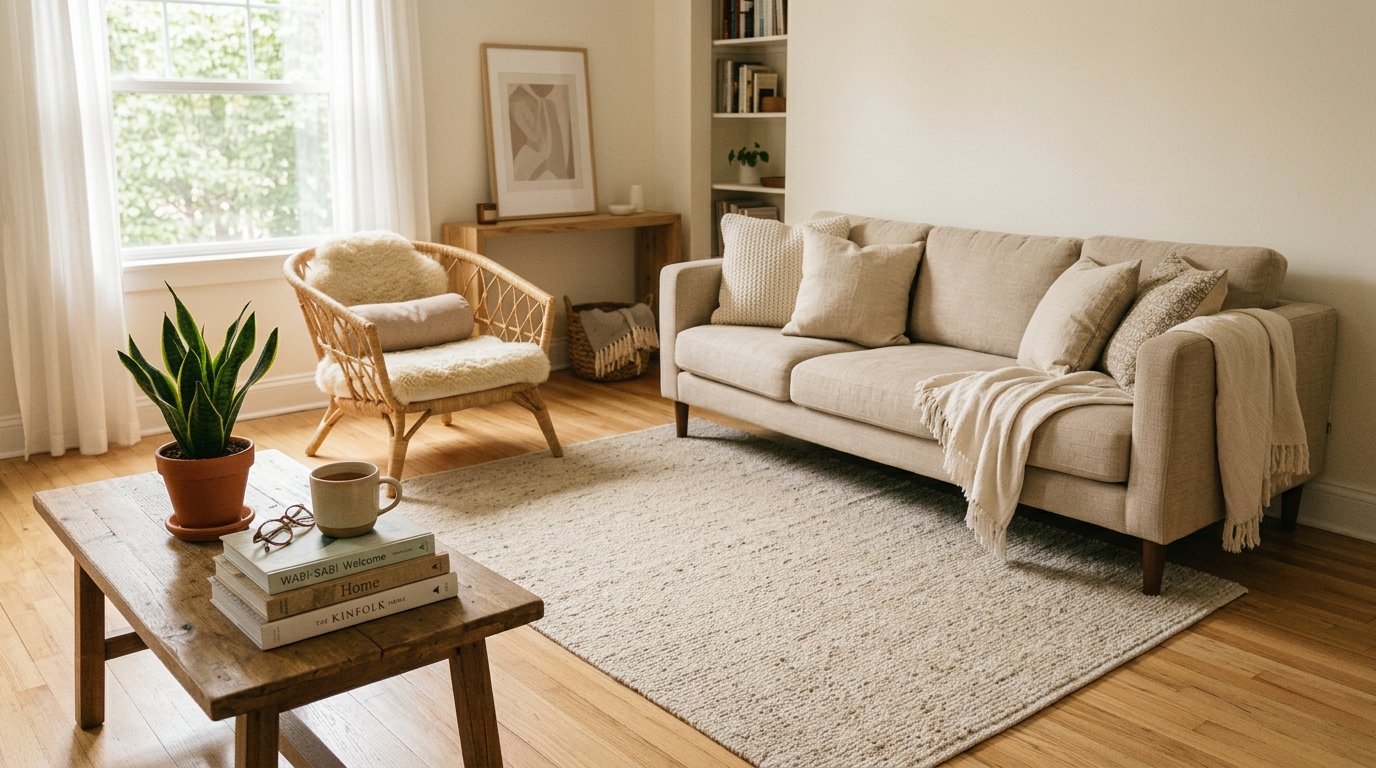
Staring at your living room floor, trying to picture how a rug will look, is oddly stressful.
A small room can flip from cozy to cramped depending on one decision, and rug size feels like the choice you're most likely to get wrong.
Go too small, and the space looks chopped up. Go too big, and you worry it'll swallow the room whole. Take a breath.
Getting your small living room rug size right is more forgiving than it feels, and this guide will show you exactly which size fits yours.
Standard Small Living Room Rug Sizes: Which One Fits?
Before you even think about color or texture, size is the decision that makes or breaks the room. A gorgeous rug in the wrong dimensions will still look off no matter how nice the pattern is.
The good news is that most small living rooms fall into one of three sizing categories, so once you know your room type, the shopping part gets a lot easier.
5' x 8' Rugs: Best for Compact Spaces and Loveseats
A 5x8 rug is the smallest size that still reads as intentional rather than accidental. If you're working with a loveseat, a couple of accent chairs, or a seating area under roughly 100 square feet, this is usually your sweet spot.
The trick with a 5x8 is placement discipline. You want the front legs of your seating pieces landing on the rug, not floating a foot away from it, because that gap is what makes a small rug look like it shrunk in the wash.
Sizing down to a 5x8 is not a compromise. In a tight apartment living room, a rug this size can define a cozy little nook without eating into your walking space, and it still leaves a visible margin of flooring around the edges, which matters more than most people expect in a compact room.
Just be careful not to center it awkwardly between furniture. It should feel anchored under your seating group, not stranded in the middle of the floor.
6' x 9' Rugs: The Golden Ratio for Most Small Apartments
If you only remember one number from this whole guide, make it 6x9.
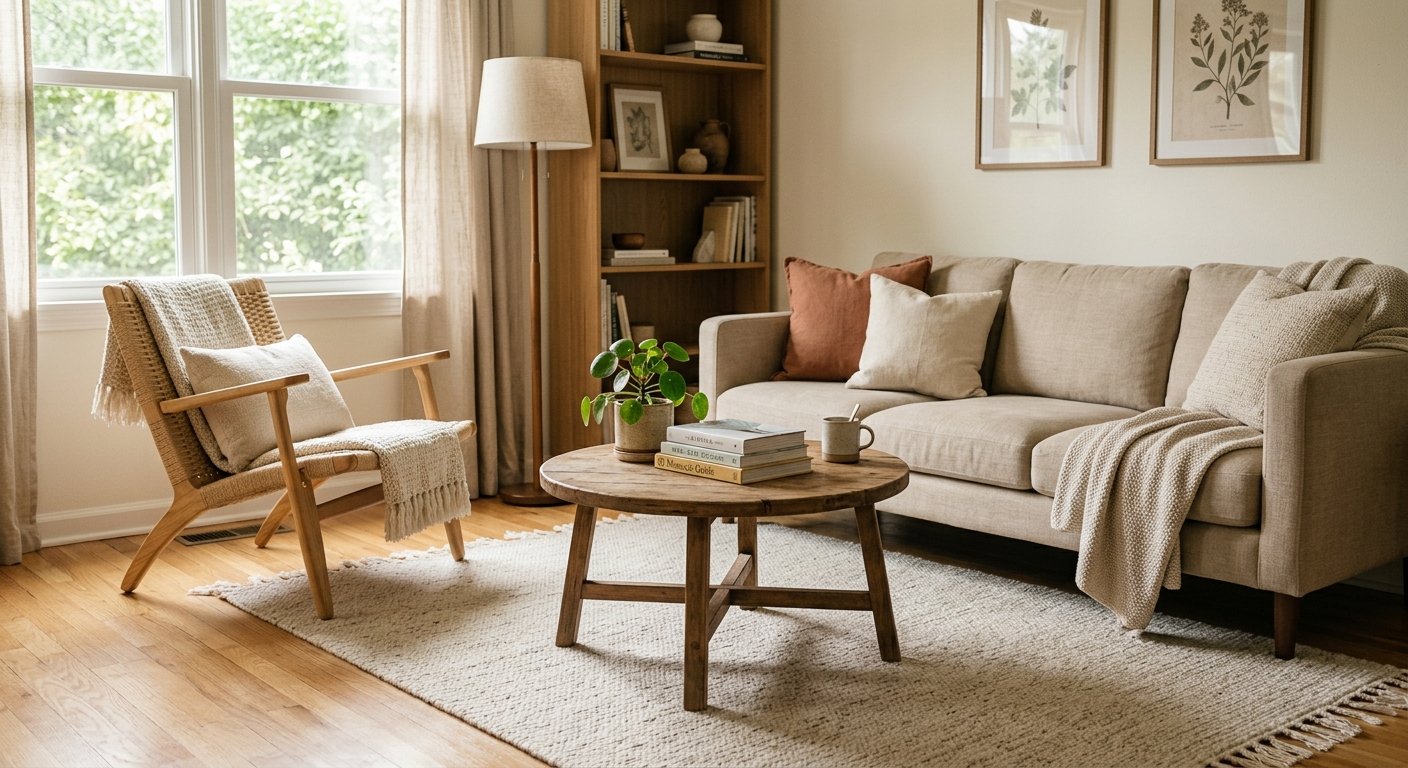
This size strikes a rare balance for small apartment living rooms: it's large enough to unify a sofa, a coffee table, and one or two chairs, but not so massive that it overwhelms modest square footage. It's the size that works most often for a living room in the 10x12 to 12x14 foot range.
What makes 6x9 so versatile is its placement flexibility. You can use all four furniture legs on the rug for a fully grounded look, or use front legs only if your room runs narrow.
Either way, the rug is generous enough to visually expand the seating area instead of shrinking it, which is exactly the illusion you want in a small room.
It's also one of the easiest sizes to find affordably, since it's a standard manufacturing dimension across most rug brands.
8' x 10' Rugs: How to Use a Larger Rug to Make a Small Room Look Bigger
This is the size that surprises people the most, and it's the one worth actually trying before you dismiss it as too big. An 8x10 rug in a small living room can make the space feel larger, not smaller, because of a simple optical trick.
When a rug stretches close to the walls with only a slim margin of exposed floor, your eye reads the entire room as one continuous surface instead of a patchwork of rug and bare floor.
The catch is that an 8x10 only works if your room can physically fit it with a little breathing room left around the edges, ideally at least 6 to 8 inches of floor showing on the tightest side.
If your living room is oddly shaped or has a lot of traffic flow cutting through it, an 8x10 can start to feel like it's fighting the architecture instead of helping it. But in a boxy or rectangular small room, sizing up is one of the most underused tricks for making 200 square feet feel like 300.
Before you commit, grab painter's tape and outline an 8x10 rectangle directly on your floor. It sounds tedious, but it's the single best way to know if the size actually works before you spend real money on something you might have to return.
Live with the taped outline for a day or two, walk around it, sit on your sofa, and look at where the edges land.
Most people are surprised by how much smaller 8x10 feels once it's actually mapped out on the floor compared to how it looked in their head.
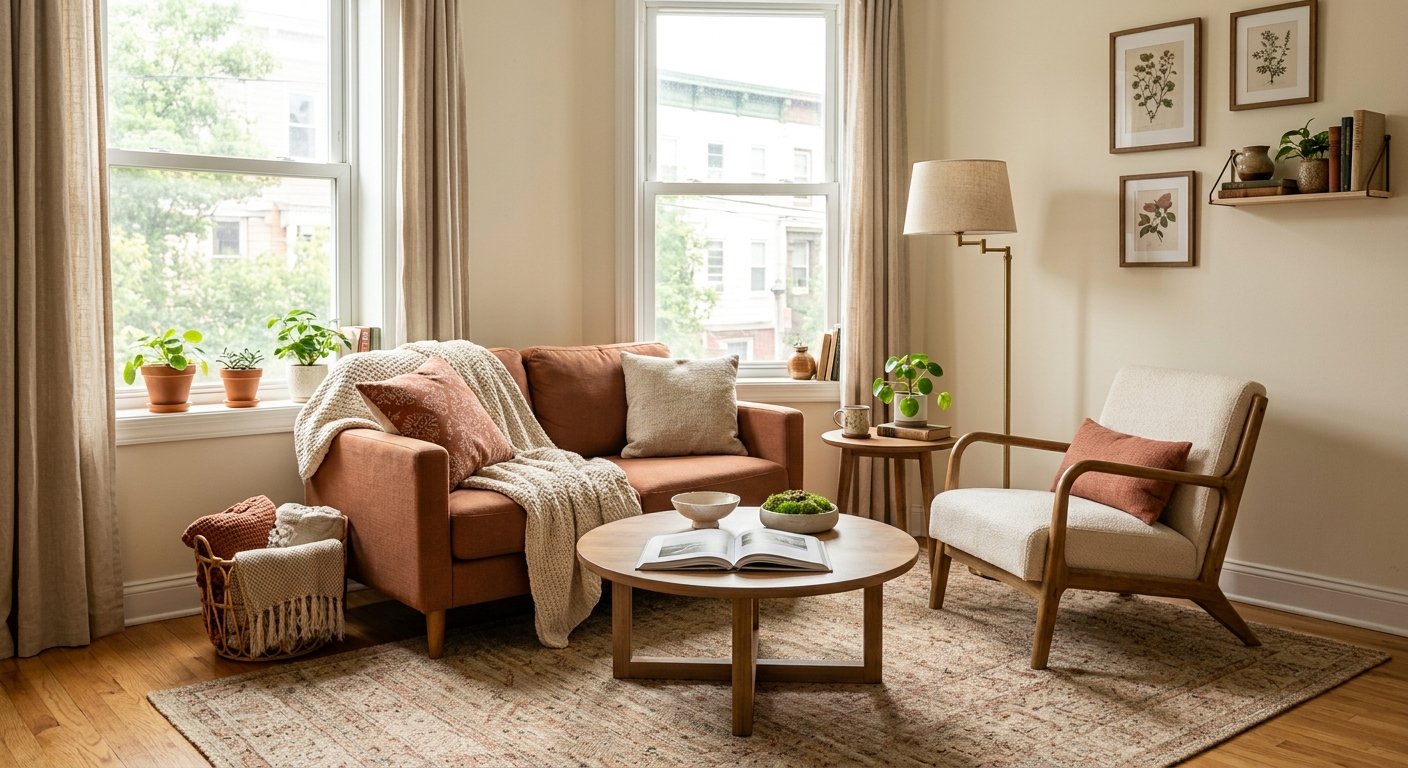
Our Recommendations
If you want a place to start, here's one option for each size worth considering:
How to Choose a Rug Size Based on Your Living Room Furniture Layout
Room dimensions only tell half the story. The other half is how your furniture is actually arranged, because two rooms of the same square footage can need completely different rug sizes depending on the layout.
Two identical 10x12 rooms can need totally different rug plans just because one has a sofa pushed against a wall and the other has it floating in the middle.
Here's how to think through it based on your specific setup.
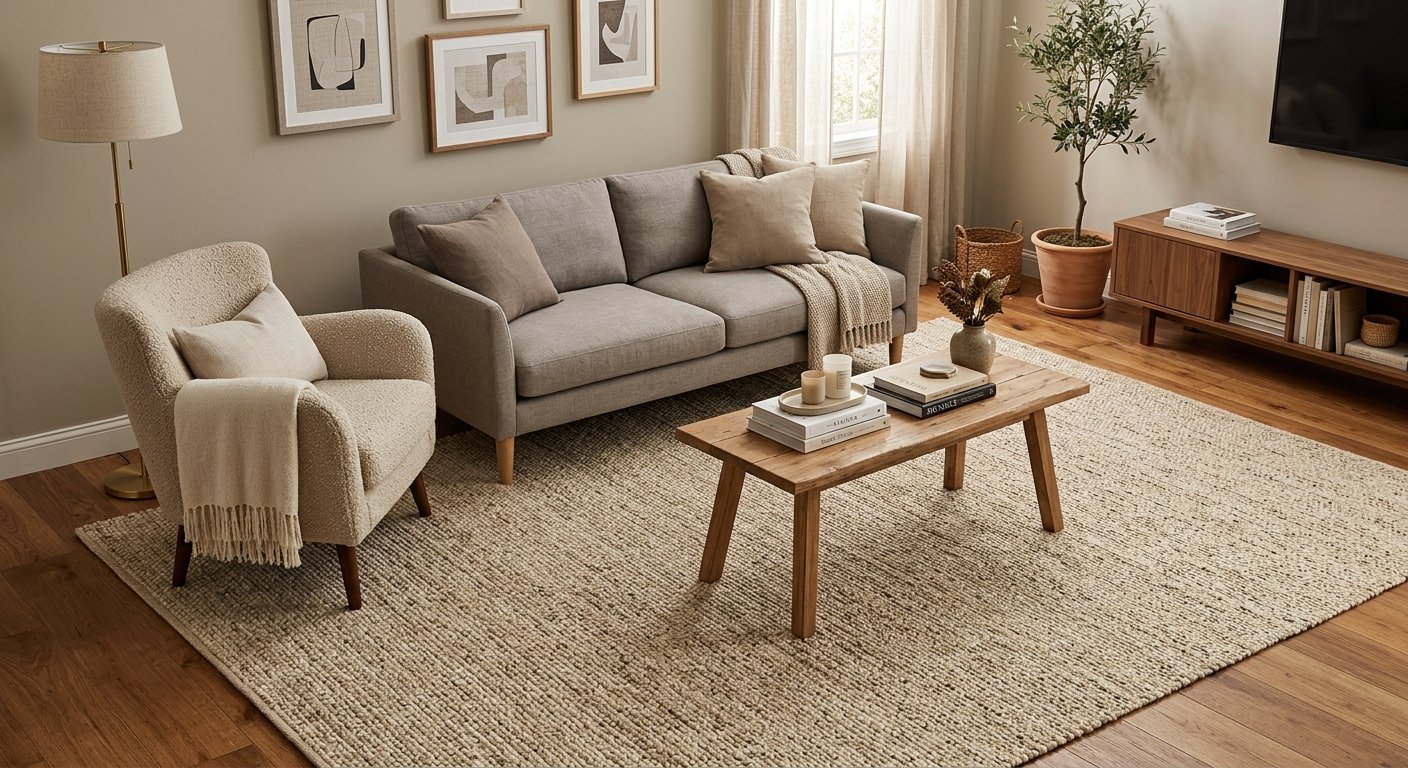
Layout Option 1: All Legs On (Best for Anchoring Open-Concept Spaces)
If your living room flows into a dining area or kitchen without a hard wall separating them, the all-legs-on-approach is usually your best bet.
This means every piece of seating, including the sofa, chairs, and any side tables within the grouping, sits entirely on top of the rug. It creates a defined boundary that tells the eye "this is the living room zone" even when there's no physical wall doing that job for you.
For this layout, you'll typically need at least a 6x9, and an 8x10 is even better if your space allows it.
The reason smaller rugs struggle here is that once you try to fit an entire seating group's legs onto a 5x8, you often run out of room and end up with furniture hanging half on, half off the edges, which looks unfinished rather than intentional.
Layout Option 2: Front Legs Only (Best for Narrow Small Living Rooms)
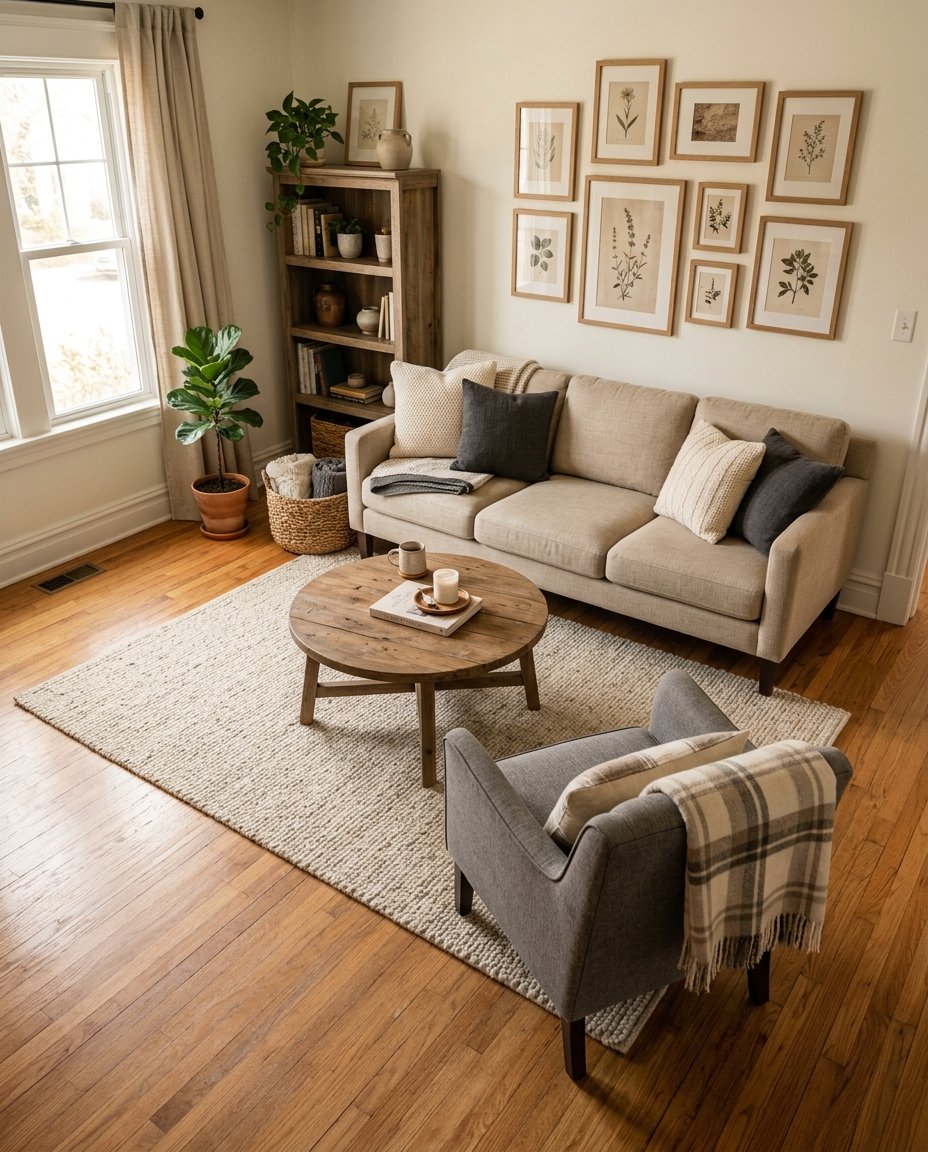
Narrow rooms, think long and skinny rather than square, tend to fight against the all-legs-on-approach because there simply isn't enough width to work with.
This is where front legs only becomes your friend. Only the front legs of your sofa and chairs touch the rug, while the back legs stay on the bare floor. It's a classic designer move because it still visually connects the furniture to the rug without requiring a rug so large it barely leaves room to walk.
A 5x8 or 6x9 usually works beautifully here, and it's honestly one of the most common layouts I recommend for railroad-style apartments or living rooms attached to a narrow hallway. The key is consistency.
If the front legs of your sofa are on the rug, make sure the front legs of any accent chairs are too, so the eye reads it as one cohesive plan rather than a mismatch.
Layout Option 3: Floating Furniture / Coffee Table Only (Best for Ultra-Tiny Spaces)
This is the layout for the truly tiny living rooms, the ones where every extra inch matters and a full-size area rug just isn't realistic.
In this setup, the rug sits under only the coffee table, with the furniture floating around it rather than touching it. A smaller rug, even something in the 4x6 range, can work here because its job isn't to anchor the whole seating group. It's just to add warmth and softness to the center of the room.
This layout gets a bad reputation for looking sparse, but it doesn't have to. The trick is choosing a rug with a bit of visual weight, whether that's a bold pattern or a deep, saturated color, so it reads as a deliberate design choice rather than an afterthought.
In genuinely small spaces, sometimes doing less with intention beats trying to force a bigger rug where it doesn't comfortably fit.
Crucial Sizing Rules for Small Living Rooms
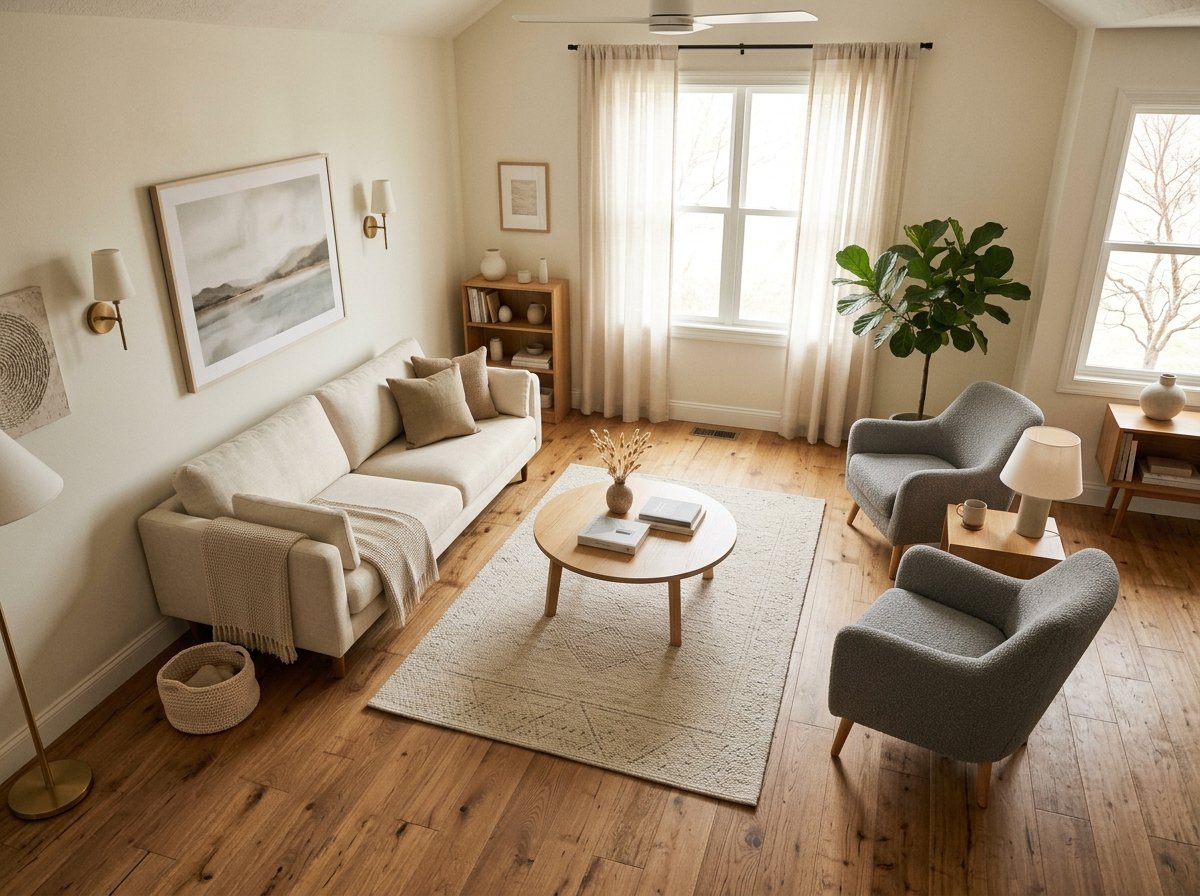
Once you've picked a general size category, a couple of specific measurement rules will keep you from second-guessing yourself once the rug actually arrives.
The 8-to-12 Inch Floor Margin Rule
This is the rule that saves the most people from ordering the wrong size. Measure your living room wall to wall, then subtract anywhere from 16 to 24 inches total, roughly 8 to 12 inches per side, to land on your ideal rug dimensions.
So a 10x12 room comfortably fits an 8x10 rug with a natural margin of exposed floor around the perimeter. That visible border of flooring is what makes a room look finished rather than wall-to-wall carpeted, and it's an easy detail to overlook when you're just eyeballing sizes online.
In smaller rooms, you can shrink that margin slightly, down to around 6 inches, without it looking cramped, but I wouldn't go tighter than that.
Less than 6 inches of exposed floor starts to read as a mistake rather than a style choice, almost like the rug was simply too big for the space it landed in.
Sofa-to-Rug Ratio: How Much Overhang Do You Need?
Here's a measurement rule worth remembering. Your rug should extend at least 6 to 8 inches beyond each armrest of your sofa if you're going for a fully grounded, all-legs-on look. Any less and the rug starts to look like it's floating under just the middle of the sofa rather than supporting the whole piece.
If you're working with a front-legs-only layout instead, aim for the rug to extend at least a foot in front of the sofa toward the coffee table, since that's the area getting the most visual and physical use.
People tend to focus on the width of the rug relative to the sofa and forget about the depth, but the front-of-sofa space is honestly just as important for the room to feel proportional.
Pro Design Hacks: Visual Tricks with Rugs in Small Spaces
Once the sizing is locked in, a few styling choices can push a small living room from "fine" to genuinely well-designed.
Light Colors vs. Dark Patterns for Small Rooms
There's a persistent myth that small rooms can only handle light, pale rugs, and it's simply not true. Light colors do open up a space and reflect more light around the room, which is a real effect worth using if your living room gets limited natural light.
But a dark, patterned rug can work just as well, sometimes better, because busy patterns and deep tones hide wear, dirt, and the inevitable scuffs of daily life far more forgivingly than a plain cream rug ever will.
The real rule isn't light versus dark. It's contrast versus flooring. If your floors are dark hardwood, a rug close to that same tone will visually blend the two and make the room feel like one continuous surface, which can actually read as more spacious than a stark light rug that draws a hard line against dark floors.
Rug color is just one part of the small-room design equation—learn how to combine it with lighting, art, and furniture choices in our guide to affordable small living room luxury.
Layering Rugs to Add Texture Without Adding Bulk
Layering feels like a trick reserved for bigger rooms, but it actually works beautifully in small living rooms when done with intention. The move is to place a smaller, textured rug, like a faux fur or a jute layer, on top of a larger flatweave base.
This adds visual depth and coziness without the bulk of one thick, oversized rug that can make a tight floor plan feel heavier than it needs to.
Keep the base layer neutral and let the top layer carry the personality, whether that's texture, color, or pattern. This approach also solves a common budget problem, since a smaller accent rug is far cheaper than upgrading your entire base rug to something more expensive.
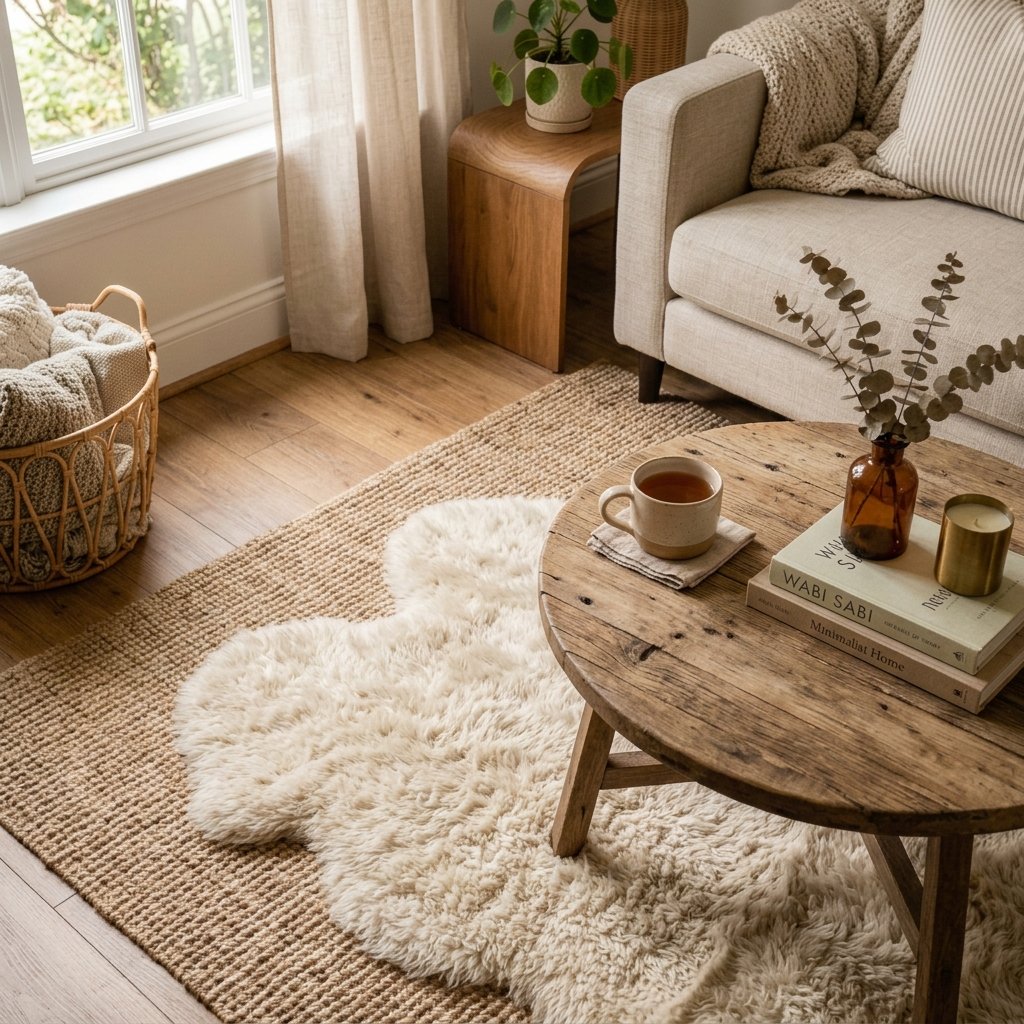
Our Recommendations
For the base layer, a natural jute rug like this one gives you that warm, textured foundation. Then layer something soft on top, like this faux fur accent, right where your feet actually land.
Round Rugs vs. Rectangular Rugs for Awkward Layouts
If your living room has an odd angle, a bay window, or furniture arranged in a circular conversation setup, a round rug might solve problems a rectangular one can't.
Round rugs work especially well under a round coffee table or in a corner nook where a rectangular shape would leave awkward, unusable triangles of space at the edges.
If your room has an odd angle or a round coffee table, a round rug like this one might solve what a rectangle can't.
That said, rectangular remains the safer default for most standard living rooms because it aligns naturally with the straight lines of a sofa and typical wall layouts.
Save round rugs for spaces that are genuinely irregular rather than defaulting to one for the sake of variety. A round rug in a perfectly rectangular room can actually work against you, drawing attention to empty corners instead of filling them.
Small Living Room Rug Sizing Cheat Sheet
Bookmark this table for a quick reference the next time you're rug shopping.
Choosing the right rug size for a small living room doesn't have to be the part of decorating that keeps you up at night.
Measure your room, be honest about how you actually use the space, and trust that a little floor margin is a feature, not a flaw.
If you're working out furniture placement in general, our small bedroom layout guide is worth a look too.
Once you get the size right, everything else- the color, the texture, the styling- becomes so much easier to layer on top.
Frequently Asked Questions (FAQ)
Can a rug be too big for a small living room?
Technically yes, but it happens less often than people assume. A rug becomes too big when it runs edge to edge with no visible floor margin at all, which can make the room feel boxed in rather than expanded. As long as you're leaving at least 6 to 8 inches of exposed flooring around the perimeter, sizing up is almost always safer than sizing down in a small living room.
Should the sofa be completely on the rug in a small room?
Not necessarily. In many small living rooms, front legs only is actually the more practical choice, since it visually connects the sofa to the rug without requiring a rug large enough to fit the entire piece. Full coverage, with all four legs on the rug, looks great in open-concept spaces, but it's not a requirement for a room to feel well designed.
What color rug makes a small living room look larger?
A rug close in tone to your flooring tends to create the most spacious feeling, since it removes the visual break between rug and floor. Light, warm neutrals do this reliably, but a mid-tone rug that closely matches your existing hardwood or laminate can be just as effective, and it hides everyday wear far better than a pale, light-colored option.