Most small entryways don't fail because they're small. They fail because everything that arrives with you- shoes, keys, bags, mail- has nowhere to land, so it lands everywhere. That's the real reason the space never looks finished.
The good news is that small entryway ideas that look expensive rarely need a foyer, a renovation, or pricey furniture. They need a few measured decisions about walkway, storage, light, and one pretty focal point.
Here's how to make those decisions, step by step, for your actual space.
Measure the Walkway Before You Buy Anything
Furniture shopping for a small entryway usually starts in the wrong place. It's easy to fall for a table or bench online and only find out later that it doesn't fit the way you walk through the space. Start with the floor instead.
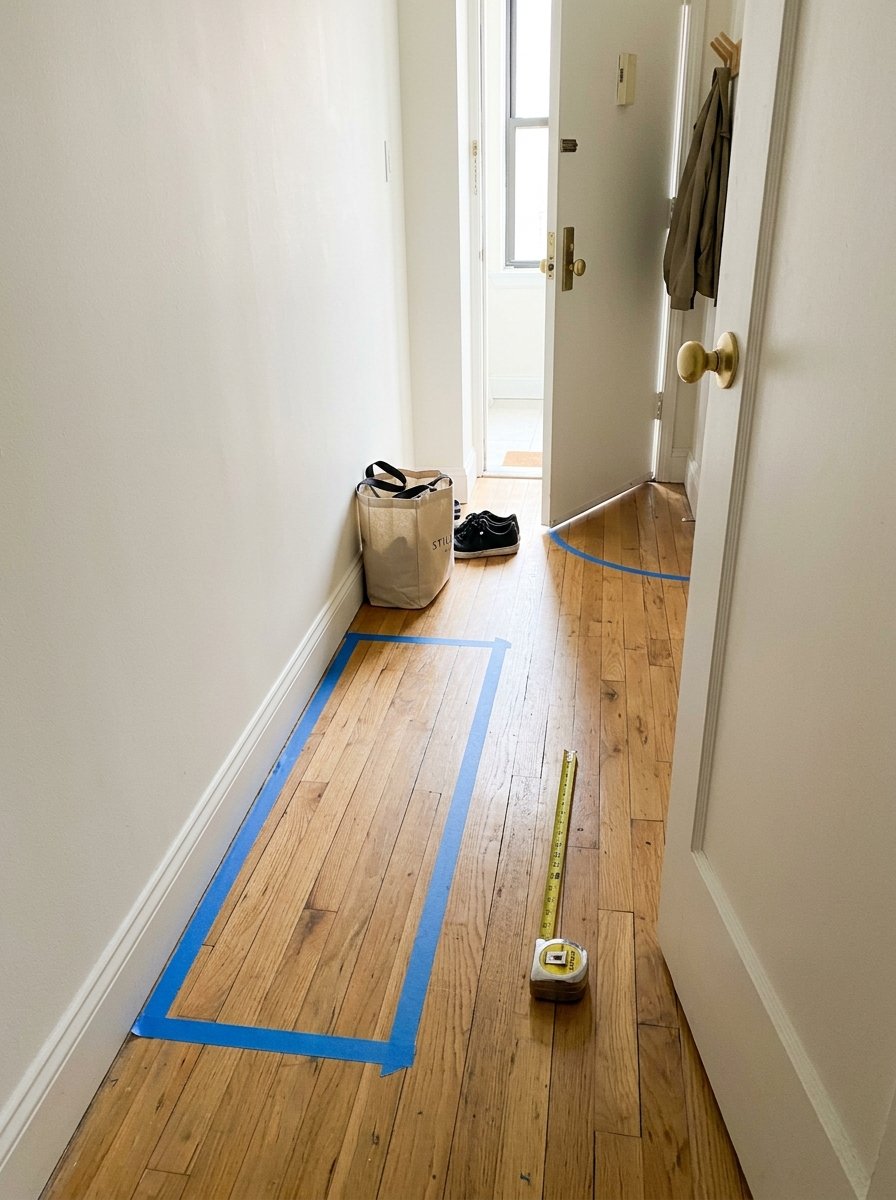
Grab painter's tape and mark where the piece would sit. Then open the front door all the way and walk in carrying something bulky, like a grocery bag or a backpack.
If you have to turn sideways, the piece is too deep or too wide. Many designers aim for roughly 36 inches of clear walking space where the room allows it.
Treat that as a starting point, because your layout, your household, and any accessibility needs may call for more.
Imagine an entry that's 40 inches wide. A console table 14 inches deep leaves 26 inches to walk through, which means turning sideways with groceries.
A shelf 8 inches deep leaves 32 inches, and the same space suddenly feels like a different room.
Pay attention to the door swing too. A door that bangs into a table every time it opens will damage both. And never place anything where it could block an exit or catch someone's foot in the dark.
When the Front Door Opens Straight Into the Living Room
Many apartments skip the foyer completely. You can build a small one anyway by giving the entrance its own zone.
A rug marks the floor, a shelf or mirror marks the wall, and the zone doesn't need walls to feel like a real place.
Pick one or two colors from your living area for the zone's pieces, so it feels connected to the room instead of tacked on.
Pick Furniture by Depth, Not by Looks
Slim Console Table or Wall-Mounted Shelf
Depth is the number that decides whether an entryway piece works. Many slim consoles are about 8 to 12 inches deep, though sizes vary, so check the listing's actual measurements instead of trusting the photo.
A freestanding console also needs a clear wall, a spot away from the door swing, and a bit of room around its legs.
In tight spots, a wall-mounted shelf is often the smarter choice. It leaves the floor visible, which helps a small space feel more open, and it's easier to clean under.
The trade-off is installation. A shelf that will hold keys and a bag strap needs screws into studs or anchors rated for the load, and renters should check their lease first.
Our Recommendation
If your entry is tight, a table that's too deep can end up in the way, so the depth of what you buy matters more than its style. Here are some useful options to choose from.
Affiliate disclosure: This post contains affiliate links. We may earn a commission if you purchase through our links, at no extra cost to you.
Do You Actually Need a Bench?
Not every entrance needs one, and plenty are worse for it. A bench earns its space when someone really sits down to put on shoes, like kids, older family members, or anyone with boots that take effort.
It doesn't earn its space if you'd have to squeeze past it, or if it turns into a landing pad for bags.
If a bench leaves less clear path than your tape test allows, skip it. A shoe cabinet with a flat top, or a wall-mounted fold-down seat, can give you somewhere to perch without taking floor space.
When your layout does allow a bench, one with open cubbies underneath doubles as shoe storage.
Build a Shoe Zone Around the Shoes You Actually Wear
Look at the pile by your door and count the pairs worn in the last week. That number, not your whole collection, is what the entryway has to hold. Everything else can live in a bedroom closet and rotate with the seasons.
From there, choose a storage style that suits your household. Closed storage, like a slim tilt-out cabinet, hides the mess and makes a small entrance look calmer, though it's best for dry pairs.
Open racks are easier to use but invite a pile, so they work better with a tray underneath for wet or muddy shoes. A bench with cubbies sits somewhere in between.
Before buying, check the interior depth, not just the outside measurements. A cabinet that looks slim may still be too shallow for large shoes or boots.
Tall, narrow cabinets can also tip, so use the anti-tip strap that many come with.
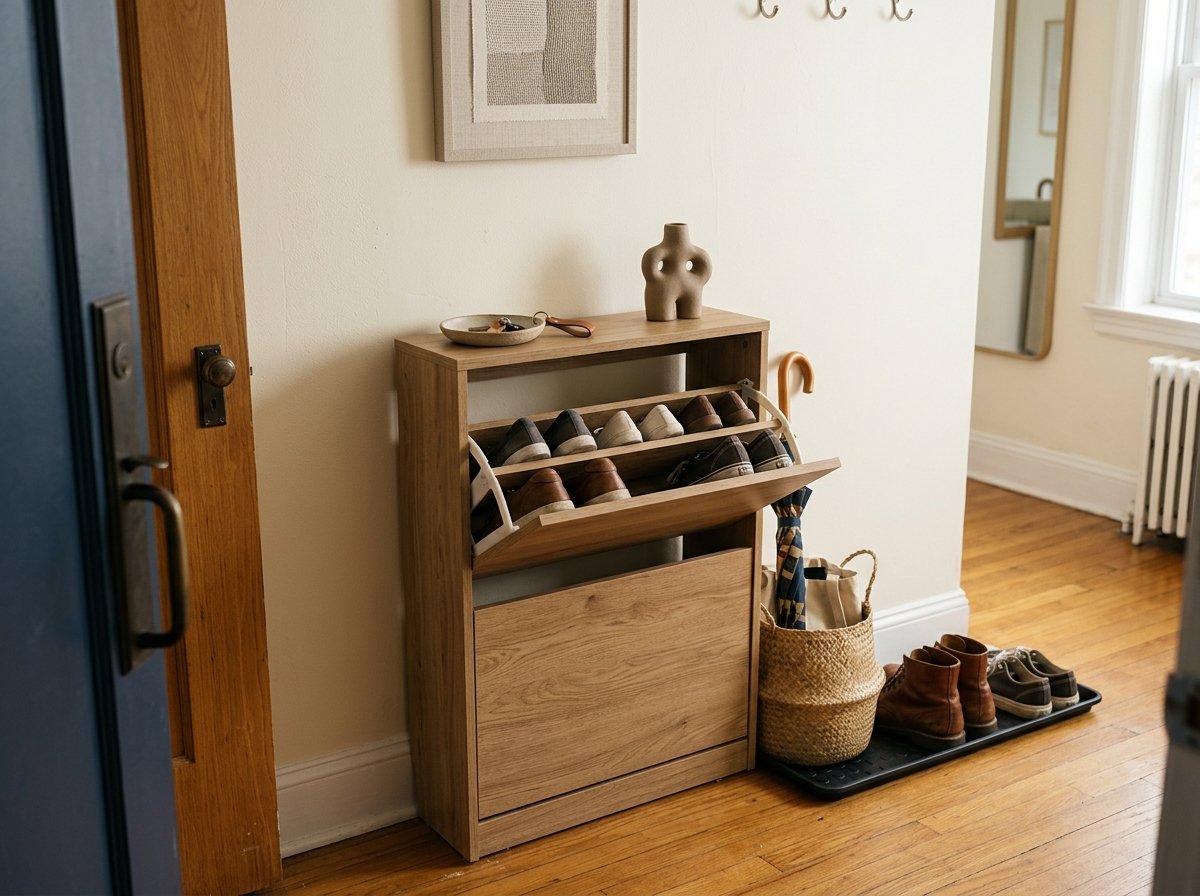
Our Recommendation
If shoes pile up beside the door, storage that fits the pairs you actually wear and gives wet boots somewhere to drip makes the biggest difference. Our top picks are:
Use the Wall for Hooks, Keys, and Mail
When the floor is crowded, give things a wall. Hooks do most of the work. Mount them at heights that suit whoever uses them, with a lower row if kids hang their own bags.
Limit them to the coats and bags you'll actually wear this week, because a hook rail packed with seasonal jackets looks like clutter in any style.
Keep keys, mail, and sunglasses in one spot, like a small tray on a shelf. That gives you a landing place and stops things from spreading across the table.
Check the weight rating on any adhesive hook before trusting it with a loaded bag, and use screws for anything heavy.
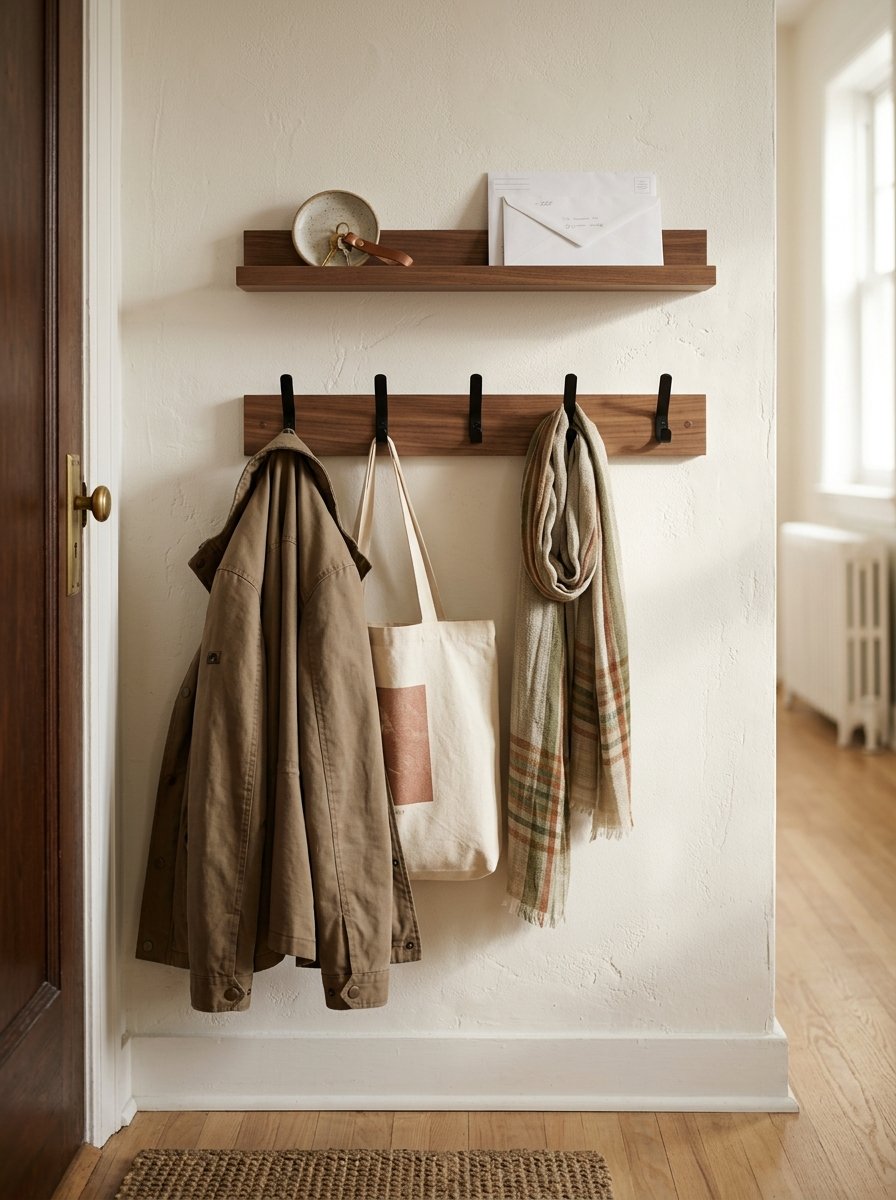
Our Recommendation
When coats and bags end up on chairs, a row of sturdy hooks gives each person a spot. A few reliable options are given below.
Brighten a Dark Entrance With Light and a Mirror
Layer Your Light
Most entrances rely on one overhead fixture, and it rarely flatters the space. Adding a second, lower light source warms things up right away.
A small table lamp on a console works well, and a plug-in wall sconce works too; no electrician needed, and it suits renters. Run cords along the wall with clips so nothing crosses the walkway.
Look for warm white bulbs, around 2700K to 3000K, so the entrance feels inviting instead of clinical. If your entrance has no window at all, light-colored walls and a lamp near the mirror do most of the work.
Our Recommendation
A dark entrance feels warmer once some of the light comes from somewhere lower than the ceiling, and you don't need an electrician for the plug-in kind.
Where to Hang the Mirror
We've talked about this a lot in our small bedroom and small living room articles: a great way to brighten a space or make a space feel bigger is to add a well-placed mirror.
A mirror doesn't physically make a room bigger. What it does is bounce light around and show a bit of the room's depth, which can make a small entrance feel brighter and more open.
Where you hang it matters more than the frame. Place it so it reflects a window, a lamp, or a sconce, not the pile of shoes or a blank wall.
As a loose guide, a mirror about two-thirds the width of the furniture beneath it looks balanced.
A heavy mirror needs hardware rated for its weight, ideally anchored into studs, and a mirror that leans on the floor should be secured so it can't tip.
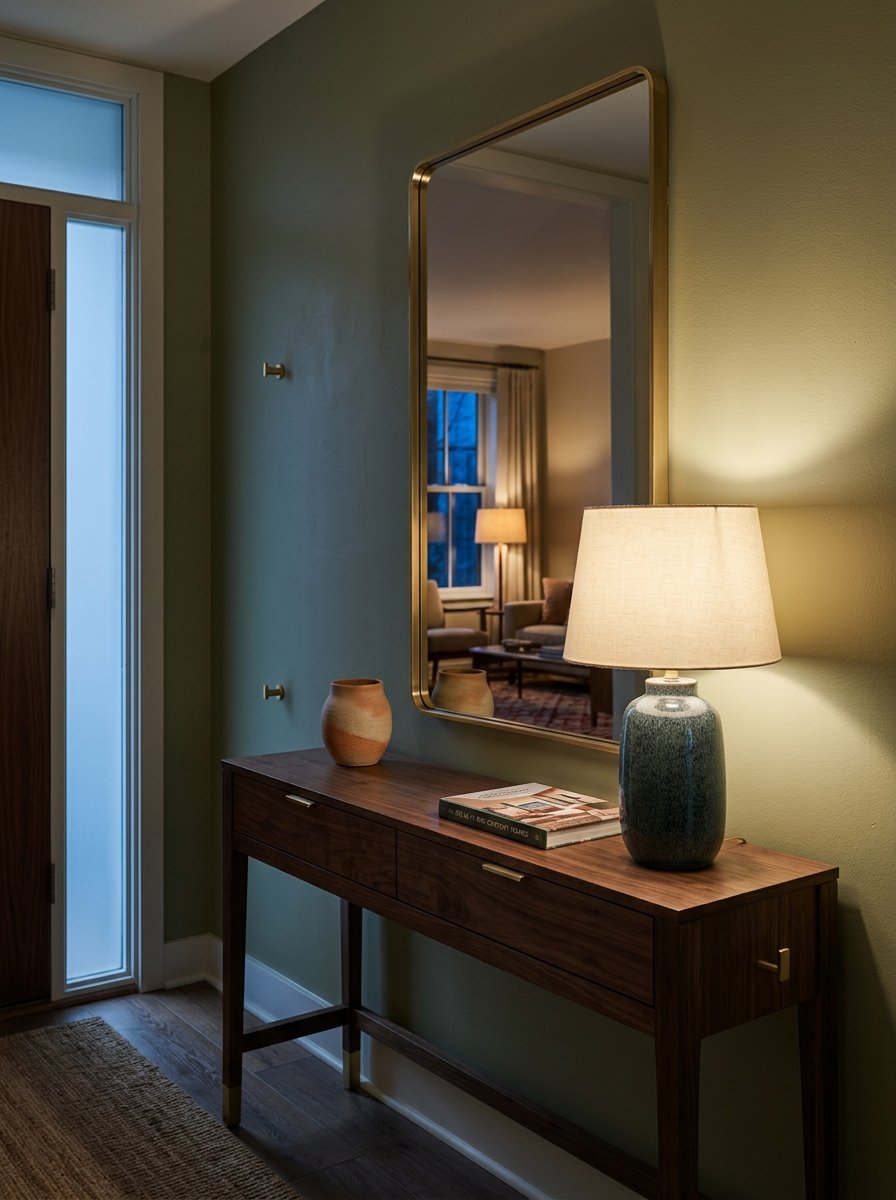
Our Recommendation
A mirror brightens a small entrance when it sits where it can catch light, and the right size keeps it from looking lost.
Entryway Table Decor Without Another Dumping Ground
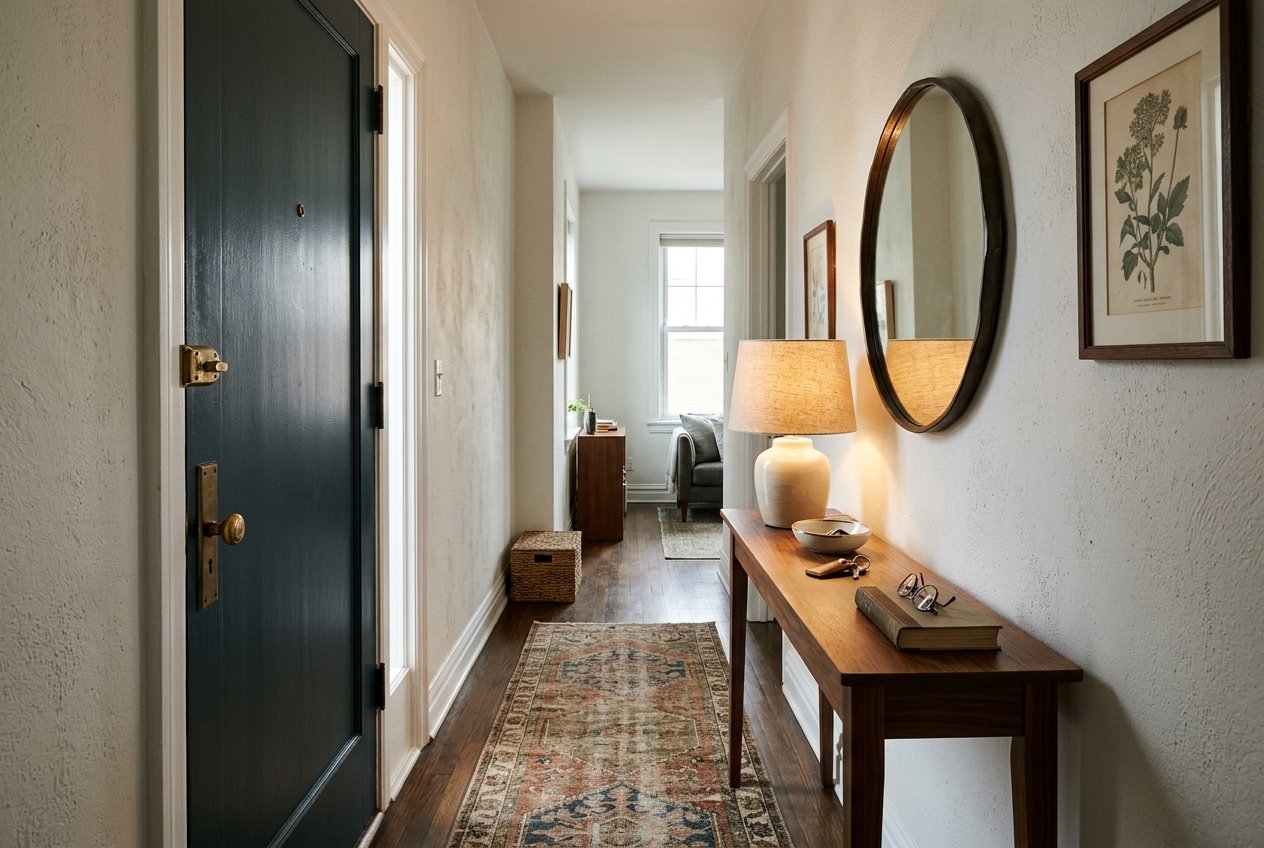
The prettiest console in the world fails if there's no room to set your keys down. Aim to keep roughly a third of the surface empty for real use.
Style the rest in layers of different heights. A small lamp or a framed print leaning on the wall adds height, a tray corrals keys, and a plant or ceramic vase adds something soft.
A basket on the floor below catches bags, and a small bowl handles loose change. When every item has a job, the table looks styled instead of stuffed.
Keep fragile pieces away from the edge, where sleeves and bags brush past.
Renter-Friendly Entryway Changes
Can you make a rental-friendly entrance feel finished without leaving holes in the wall? Mostly, yes.
Freestanding furniture is the easiest place to start. A slim console and a shoe cabinet need no drilling at all.
A leaning mirror is also a no-drill option, but tall ones can tip, so keep it out of the walkway and away from kids and pets unless you can secure it.
Adhesive hooks and over-the-door hooks handle coats and bags, as long as you respect their weight limits and test the adhesive on a hidden patch of paint first, since some can lift paint when removed.
Plug-in sconces solve the lighting problem. A runner or small rug defines the zone, and removable wallpaper on one small wall adds color, though it's worth testing a patch and reading your lease.
Anything that needs drilling, like a heavy mirror or a wall shelf, needs your landlord's okay.

How to Get an Expensive Look on a Realistic Budget
Expensive-looking entrances share three traits. They're tidy, they're well lit, and everything looks like it belongs together.
Start with what you own. Clear the surface, move off-season coats elsewhere, and gather loose items into one basket. Next, make the finishes match.
If your hooks are black, choose a lamp base, a picture frame, and a mirror frame in black or warm brass, and stop at two finishes.
Fix the lighting after that, since it costs little and changes the mood. Then add one focal piece, usually a mirror or a piece of art, instead of several small decor items.
A runner can anchor the zone, but choose a low pile so the door clears it, and add a rug pad so it stays flat underfoot.
If you spend a bit more anywhere, spend it on things you handle daily or mount on the wall, like hooks and a good mirror, and save on accessories.
Our Recommendation
A runner helps an entryway feel finished, but only if the door clears it and it stays flat underfoot.
Say you're starting with a bare wall and a pile of shoes. A weekend might look like this.
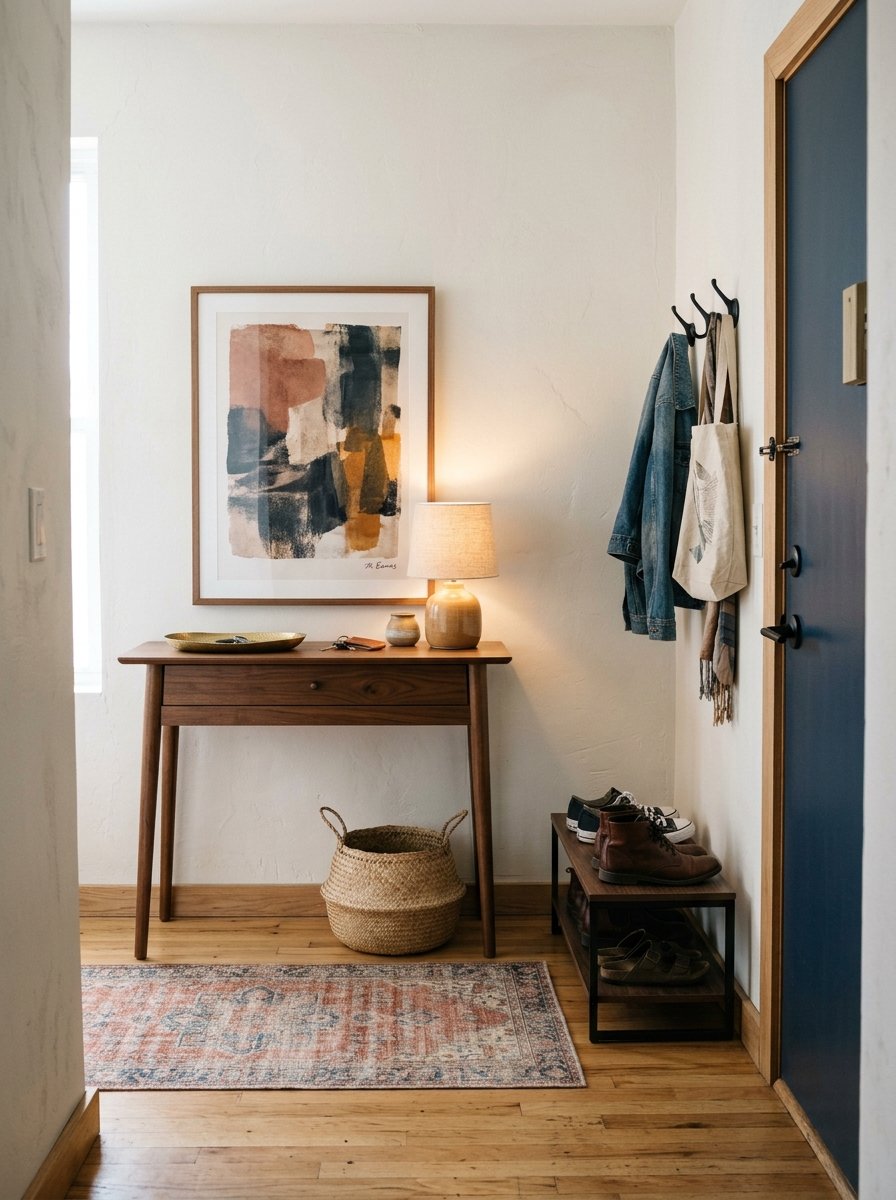
You cut the shoes down to this week's pairs on an open rack, hang a row of matching hooks, put a mirror beside a lamp, and lay down a runner with a pad. Nothing is custom, and the space looks planned.
Entryway Mistakes That Make a Small Space Feel Smaller
- Buying before taping out. A piece that fits the wall can still fail the walkway.
- Letting hooks become a heap. Too many coats and bags turn a tidy rail into clutter.
- Using the wrong rug. One that catches the door or slides underfoot is a trip hazard.
- Trusting weak hardware. Heavy mirrors and shelves need anchors rated for their weight.
- Covering every surface. Small decor pieces everywhere make a small space feel busier.
Conclusion
A welcoming entrance depends on a few thoughtful choices, not square footage or expensive furniture.
Before you buy anything, decide which problem bothers you most. If it's shoes, start with the shoe zone.
If the space feels dark, start with a lamp. Once the walkway is clear, the rest is one pretty piece and a place for your keys.
Frequently Asked Questions
How wide does an entryway need to be for a console table?
There's no single number, because it depends on the table's depth and how much room you need to walk. Subtract the table's depth from the width of the space. If what's left is much under 36 inches, a wall-mounted shelf, or no table at all, is usually the better choice.
What can I do if my entrance has almost no wall space?
Use the door. An over-the-door hook rack handles coats and bags, a slim mirror on the door adds light, and a small tray on a nearby shelf holds keys. Keep anything on the door light enough that it won't strain the hinges or stop the door from closing.
How do I add storage without a closet?
Stack it in layers. Hooks hold what you wear this week, a slim shoe cabinet or bench holds the daily pairs, and a basket under a shelf catches bags and scarves. Move off-season items to a bedroom closet or under the bed, so the entrance holds only what you use.